Sunday, 4 February 2018

Dominical re-visited

My last weekend at the beach was mainly spent on the beach, however, on Saturday morning I got in a few hours birding, visiting the estuary mouth where I saw my first Yellow-crowned Night-heron roosting in a tree, three Collared Plovers, and a flock of c.15 Tricoloured Munias flew over.

Waders consisted of c.30 Semipalmated Plovers, four Wilsons Plovers, 14 Least Sandpipers, four Willets, one Whimbrel, two Ruddy Turnstone, and six Sanderling. On Sunday morning, it appeared like there was a small feeding frenzy offshore, with fish leaping two metres clear out of the sea, being chased by whatever predators lurked below. On a couple of occasions, Magnificent Frigatebirds swooped down to catch the fish in mid-air. Also in attendance were four Brown Boobys and eight Royal Terns.

Yellow-crowned Night-heron
Royal Tern
Neotropic Cormorant
Wilson's Plover
Collared Plover, Least Sandpipers, Semipalmated Plovers and Royal Terns
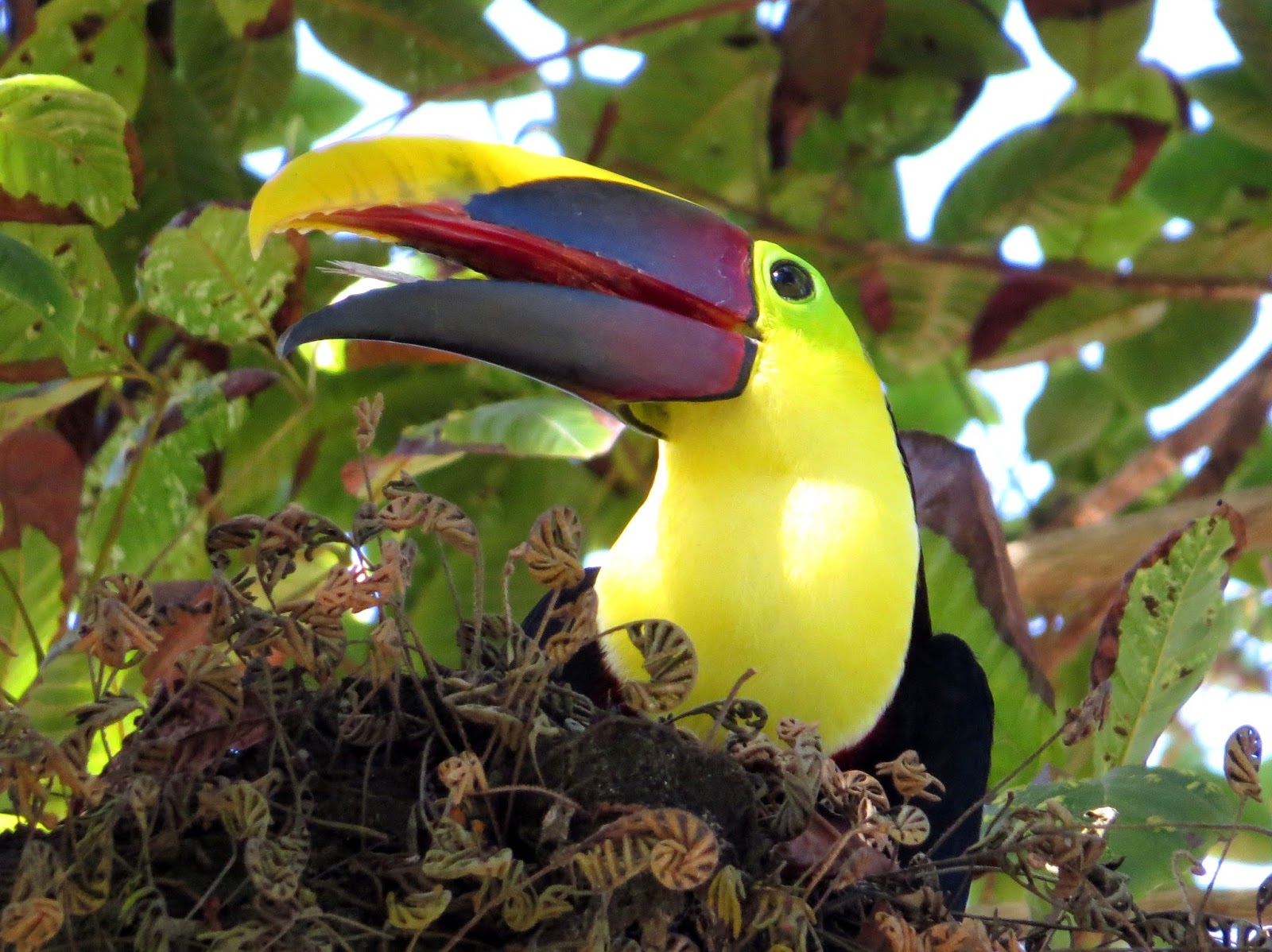
Chestnut-mandibled Toucan
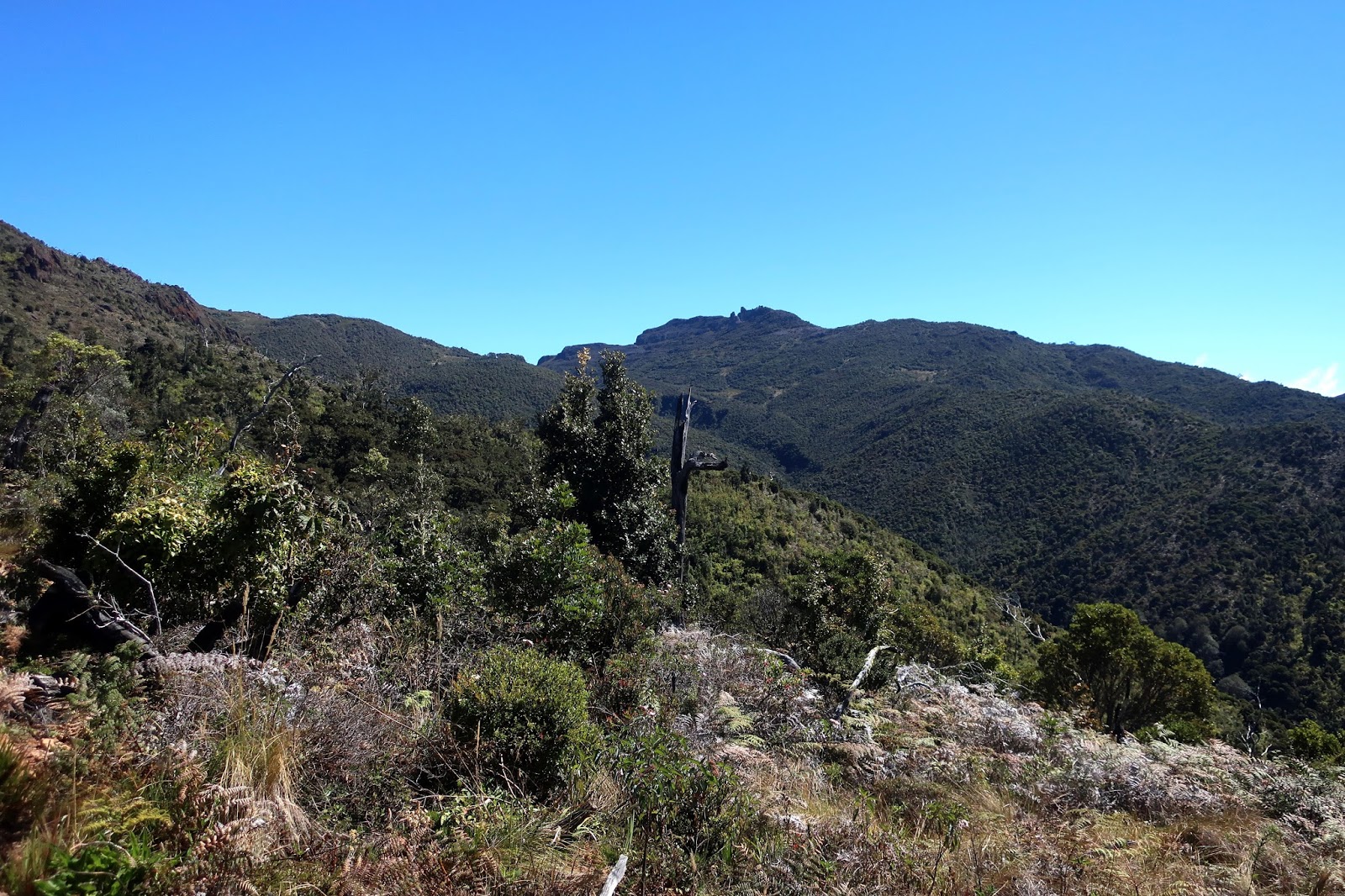
Looking south just after sunrise.

Friday, 2 February 2018

Quetzals around camp

A pair of Resplendent Quetzals perched up around the centre this morning. This led to a great deal of excitement, with a large group of 25+ people (including two tour groups) watching them as they made their way from tree to tree, perching for a couple of minutes at a time.

Resplendent Quetzal (male)
Resplendent Quetzal (female)
The Resplendent Quetzal is thought to have been revered by local people going back to the Mayan and Incan times. One legend of indigenous Guatemalans is that the quetzal received its showy plumage during the European conquest of the Americas: "After a particularly gruesome battle, huge flocks of quetzals (which were then only green) flew down to keep watch over dead Mayans, thus staining their breasts red." Mayans used the long tail plumes for artwork, feather capes, and ceremonial head-dresses. The chief god of the Mayans was Kukulcan and the chief god of the Toltecs was Quetzalcoatl, both meaning "The Plumed Serpent."

The quetzal remains a part of Central America today, and cannot live in captivity, a poetic quality that has made them a symbol of freedom for the people of Central America.

Thursday, 1 February 2018

San Isidro Sewage Treatment Plant

There is a real lack of natural lakes in this area of Costa Rica, so last weekend, when driving out of San Isidro in a bus, I was pleased to see a large man-made lake with 100+ ducks in residence. I later found out that this was a sewage treatment plant, and made a visit this morning.

Counts included 110 Blue-winged Teal, 60 Black-bellied Whistling-ducks, one Lesser Scaup, 11 Northern Jacana, 11 Spotted Sandpipers, one Solitary Sandpiper, one Black-necked Stilt, one Green Heron and a few Mangrove Swallows.

A Yellow-rumped Warbler perched up in a tree bordering the lakes, and as I was walking back to the bus stop in town, two Fork-tailed Flycatchers flew over, immediately followed by a flyover White-tailed Hawk that fooled me into thinking it was a gull at first. The Fork-tailed Flycatchers looked incredible with their long tails trailing their dumpy little bodies at around five times the length.

Black-necked Stilt (left), Solitary Sandpiper (right)
Blue-winged Teal
Northern Jacana (middle), Spotted Sandpipers (top and bottom)
Northern Jacana (right), Green Iguana (left) - the Green Iguana is the second largest lizard in the world.
Black-bellied Whistling-duck
Black-bellied Whistling-ducks
Lesser Scaup
Blue-winged Teals
Green Heron
Yellow-rumped Warbler
White-tailed Kite
The sewage treatment lakes.

Wednesday, 31 January 2018

Walk to Monte Azul

Today, I set off at 4:30am to walk down to an altitude of 1000 metres. A Common Pauraque showed well beside the track on the way down, and a White-throated Thrush was seen just after sunrise in the same tree as a pair of Smoky-brown Woodpeckers. A female Cooper's Hawk flew close overhead and at least two Costa Rican Swifts were flying around, giving good views against the opposite side of the valley. A White-breasted Wood-wren also called and showed well on a rocky cliff.

Common Pauraque - this one allowed for a close approach to be photographed with the aid of my headlight.
White-throated Thrush
Blue-crowned Motmot - one of the best looking species in Costa Rica. Motmots are generally seen daily in the Cloudbridge area.

Tuesday, 30 January 2018

To the tree line

Yesterday, I walked up the Chirripo trail to just above the tree line (3100 m); a 20 km round trip, gaining 1600 m in altitude. We set off at 4:30am, and it got light enough for birding at around the 2300 m mark.

The only new species of bird seen was a female Magnificent Hummingbird, however it was also nice to see Large-footed Finch, Sooty Thrush, Volcano Junco, Volcano Hummingbird and Black-capped Flycatcher again.

As we were having a biscuit break at the top, a Swallow-tailed Kite flew over before hunting low over the hillsides.

The highlight however was a very intimate moment with a group of Spotted Wood-quails. Sitting quietly on the floor, they would approach, seemingly without any fear, to just a few centimetres.

Spotted Wood Quail - taken on 0x zoom with my compact camera.
I hope they don't behave the same way when they encounter Ocelots.
Black-capped Flycatcher
Black-billed Nightingale-thrush
Buffy Tuftedcheeck
Slaty Flowerpiercer
The sky remained crysal clear for the whole walk.

Monday, 29 January 2018

Chacara

On Saturday, we visited Chacara, a small hamlet on the shore of a large estuary south of Uvita. When we arrived, a local fisherman was discarding unwanted fish from his boat, and in attendance were 30+ Magnificent Frigatebirds, 40+ Black Vultures and 5+ Brown Pelican.

A walk along the shore of the estuary towards the mouth revealed 40+ Sanderling in flocks with a Least Sandpiper, and two Spotted Sandpipers. A large group of 60 Royal Terns were roosting on rocks in the estuary mouth along with seven Sandwich Tern, two Whimbrel, c.15 Ruddy Turnstone and one Surfbird.

An Anhinga was also drying its wings on a wooden perch in the middle of the estuary along with a Belted Kingfisher.

Magnificent Frigatebirds - before today, I'd never appreciated the shear size of frigatebirds, having only ever seen them soaring high overhead or out to sea.
Brown Pelican
Mangrove Swallow
Least Sandpiper (with Sanderling)
Royal Tern (left), Ruddy Turnstone (middle), Whimbrel (right)
Royal and Sandwich Tern
Ruddy Turnstone (left), Surfbird (right)
Belted Kingfisher (left), Snowy Egret (middle), Anhinga (right)