Sunday, 14 January 2018

Herradura

Today, I woke up early to meet the other "birders" at 5am to go out birding for the day, however the light drizzle was apparently sufficient to put them off! So I decided to go and explore the Herradura valley by myself. Two Smoky-brown Woodpeckers at the base of the valley got me off to a good start, swiftly followed by two calling Yellow-billed Caciques. The next excitement was provided by an Olive-sided Flycatcher; a common migrant, but a rare wintering species.

Near the top, I met a local coffee farmer who insisted on showing me around his farm where he said there were "muchos aves" on the organically grown crops. To my surprise, I quickly realised I was staring at a flock of 10+ Indigo Buntings; an uncommon winterer in Costa Rica.

Olive-sided Flycatcher
The local Cattle Egret roost.
Long-tailed Silky-flycatcher - after exploring Herradura, I met up with some friends at the Secret Garden restaurant where this bird gave close views on the feeder.
On my private tour.
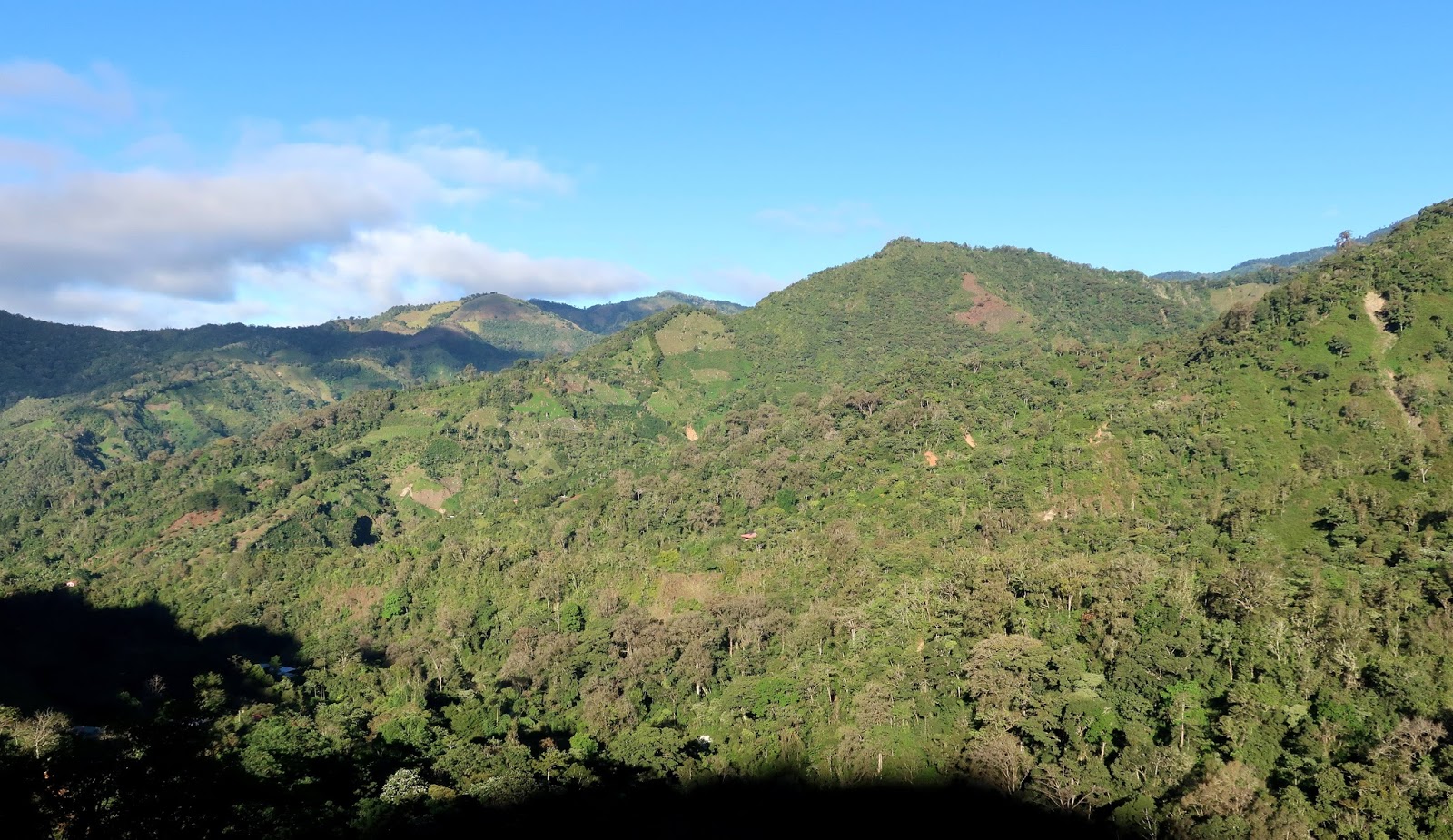
Looking down the valley.
The Rio Blanco.
A bat species that was trapped inside someones house.

Friday, 12 January 2018

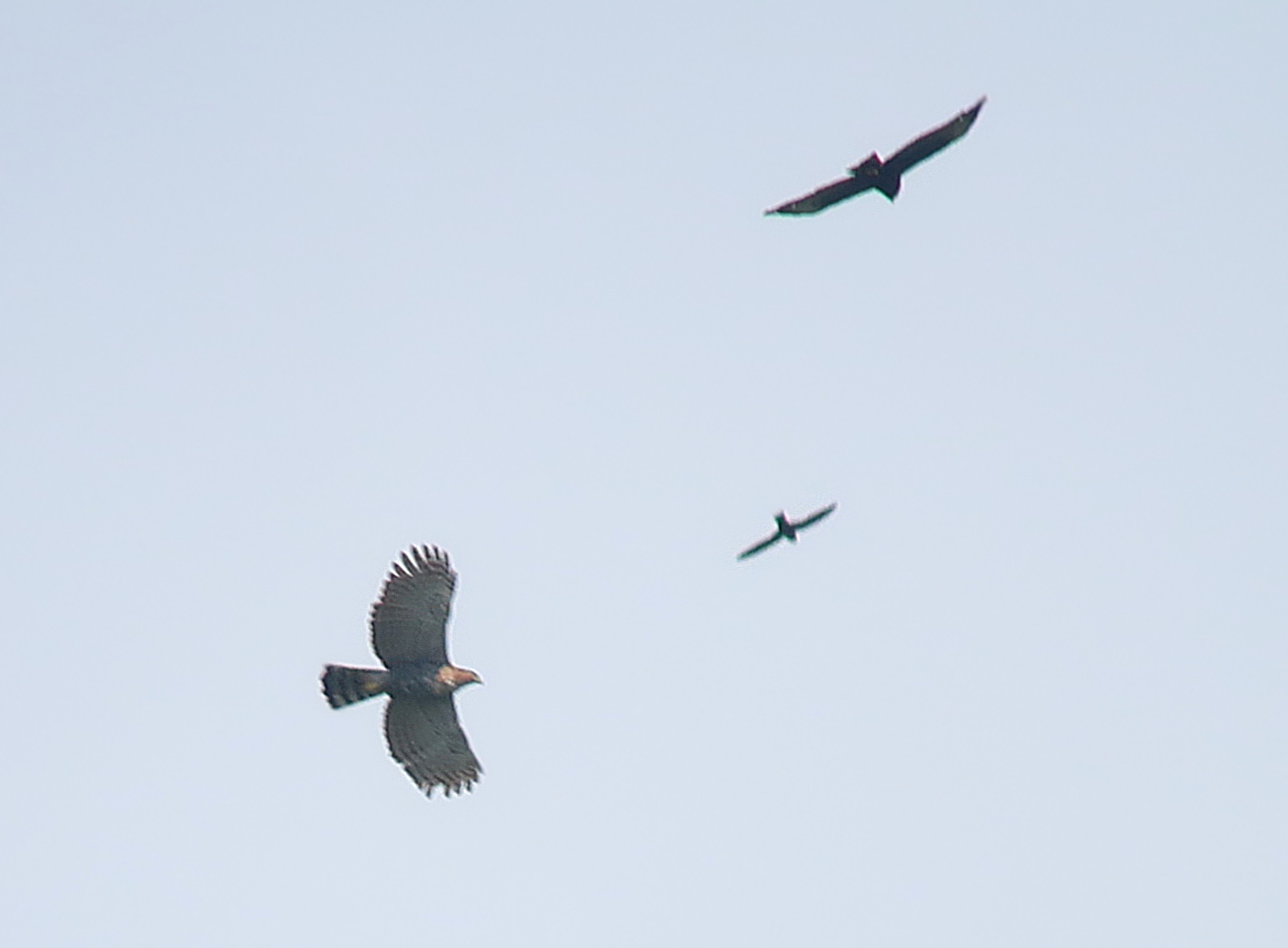
Barred Hawks

Three Barred Hawks displaying over the valley yesterday were the highlight, a species I've been wanting to see since being in Costa Rica. They first entered my binocular view as I was watching the Ornate Hawk-eagle soaring over, dive bombing it continuously until the eagle retreated up to the mountains again.

A female Yellow-bellied Siskin was another first today along with Cloudbridge's first Yellow-bellied Sapsucker.

Barred Hawks
Yellow-bellied Siskin (fem)
Yellow-bellied Sapsucker
Spot-crowned Woodcreeper
Red-tailed Hawk - this bird flew down the river gorge on the Don Victor trail and landed in a tree to dry its wings having presumably just had a wash.
The trails on Cloudbridge north are a lot more open and offer spectacular views.
A giant undergoing a few decade's battle with a strangler tree.

Tuesday, 9 January 2018

Ornate Hawk-eagle

A 3.5 hour scan of the skies from a little further down the valley was again worthwhile. At 8:15am, a nice variety of swifts came appeared, including 50+ Vaux's Swifts, almost outnumbering the White-collared Swifts which were less numerous than previous days. The highlights were at least two Chestnut-collared Swifts and 5+ White-chinned Swifts; both giving good scope views against the trees on the other side of the valley.

Then the raptors started appearing as the thermals built. First, three Red-tailed Hawks, then four Broad-winged Hawks, then a Short-tailed Hawk, and then an adult Ornate Hawk-eagle came soaring down, and showed well, circling for a good few minutes before flying back up the valley. An Osprey circling a little lower down the valley was also an interesting record. I'm finding it hard to think where it will get fish from this high in the mountains with no lakes nearby; unless it is visiting the nearby trout farm!

Ornate Hawk-eagle
Ornate Hawk-eagle (left), White-collared Swift (middle), Short-tailed Hawk (right) - this shot shows just how big White-collared Swifts are!
White-collared Swift
Paltry Tyrannulet
Chestnut-capped Brush-finch - this species is usually seen foraging on the ground, deep in the forest and are consequently hard to photograph. This one however perched up to sing today; the first I've heard since being here.
Bay-headed Tanager
Spotted Barbtail
Ruddy Ground-dove
Looking down the valley from Cloudbridge.

Sunday, 7 January 2018

Great Black Hawk!

A raptor scan this morning was very profitable, with both mine and the reserve's first Great Black Hawk seen. I first clapped eyes on it as it circled up from the trees at about 11am, and immediately knew it was something exciting. On closer inspection through my scope, I could see the extensive white rump together with a thinner white tail-band. It showed for a further two minutes before being lost to the clouds.

This wasn't the only raptor excitement of the day though; earlier in the morning a my first Sharp-shinned Hawk flew over while being mobbed by a Blue-and-white Swallow. Other raptors seen included five Red-tailed Hawks, one Roadside Hawk, one Broad-winged Hawk one Short-tailed Hawk and numerous Turkey and Black Vultures. 200+ White-collared Swifts also came up the valley together with five small swift sp. that remained too high to identify. A Streaked Flycatcher just down the road from Cloudbridge was an interesting record, since the species is rare in the uplands.

What was certainly a more unusual record, seen yesterday on the way back up to Cloudbridge in the back of the truck, was a Magnificent Frigatebird, flying around in the mist.

Great Black Hawk (imm.) - this is the largest raptor ever seen at Cloudbridge (excluding vultures).
Streaked Flycatcher
Magnificent Frigatebird - it almost appeared ghostly as it soared through the mist. This is the second record for Cloudbridge, the first seen just a few months ago after Storm Nate. It's hard to believe these birds make it all the way to the central mountains of Costa Rica. Maybe there is regularly exchange between the Pacific and the Caribbean. They are very strong flyers after all. Or maybe this one got lost in the recent unseasonable cloudy and wet weather?

Friday, 5 January 2018

Black-faced Solitaire

This Black-faced Solitaire perched up nicely for me this morning, there best views I've had of this species to date. During the week, my first Three-stripped Warblers showed along main trail along with a Golden-bellied Flycatcher. Another Louisiana Waterthrush was also feeding along one of the small mountain streams.

Black-faced Solitaire
Cherrie's Tanager - a common species of tanager, the males being particularly smart.
White-tipped Dove - one of the commoner species of dove. My first for Cloudbridge showed up outside the common room on the morning of New Year's Day.

Tuesday, 2 January 2018

Louisiana Waterthrush

A Louisiana Waterthrush was a surprise today, hopping around a field in the Chispa Valley. A Streaked Saltator, also new, landed briefly in a tree, and another Mourning Warbler skulked elusively in low vegetation. My first flock of Red-fronted Parrotlets flew over, and a small flock of five Red-legged Honeycreepers passed through on the way back.


Louisiana Waterthrush - this species breeds in the eastern half of the USA unlike the Northern Waterthrush which breeds in Canada. Rather peculiarly, there is little to no attitudinal range overlap in their wintering grounds in Central America, with the Louisiana Waterthrush only occurring at high elevations.
Buff-rumped Warbler - the first time I have seen this species in the open, this bird was singing from a rock on the edge of the River Chispa. It sings with an accelerating series of down-turned notes.
Red-crowned Woodpecker (male) - in females, the red cap is restricted to the nape.
Batlimore Oriole (male)
Streaked Saltator
The view while walking back to Cloudbridge.